

Short answer: Test an angel eyes sample against a written checklist before placing a wholesale order. Confirm the exact model, physical fitment, wiring and controller configuration, lighting effect, pair consistency, installation result, packaging, and the acceptance criteria that will also apply to the bulk order.
A sample does not prove that every future unit will be identical, but it helps distributors, importers, and retrofit shops remove avoidable misunderstandings before quantity, customization, packaging, and lead time are confirmed.
Why test an angel eyes sample before ordering in bulk?
Angel eyes products can differ by ring diameter, shape, projector or shroud size, mounting method, wire exit, controller, color effect, and packaging. Two products with similar names may not fit the same headlight or create the same visual result.
A useful sample test should answer three questions: Does the product match the quotation? Does it work in the intended headlight or sales application? Can the approved result be described clearly enough for the supplier to repeat it in production?
1. Confirm the exact product reference
Before testing, match the sample to the quotation, product URL, catalog code, or approved photo. Do not rely only on a broad name such as “RGB angel eyes” or “5D crystal halo.”
- Record the supplier’s product code or catalog reference.
- Photograph the product, label, controller, driver, connectors, and included accessories.
- Confirm whether the sample is a standard item or a custom version.
- Ask the supplier to identify any option that may change in the bulk order.
2. Measure fitment and installation space
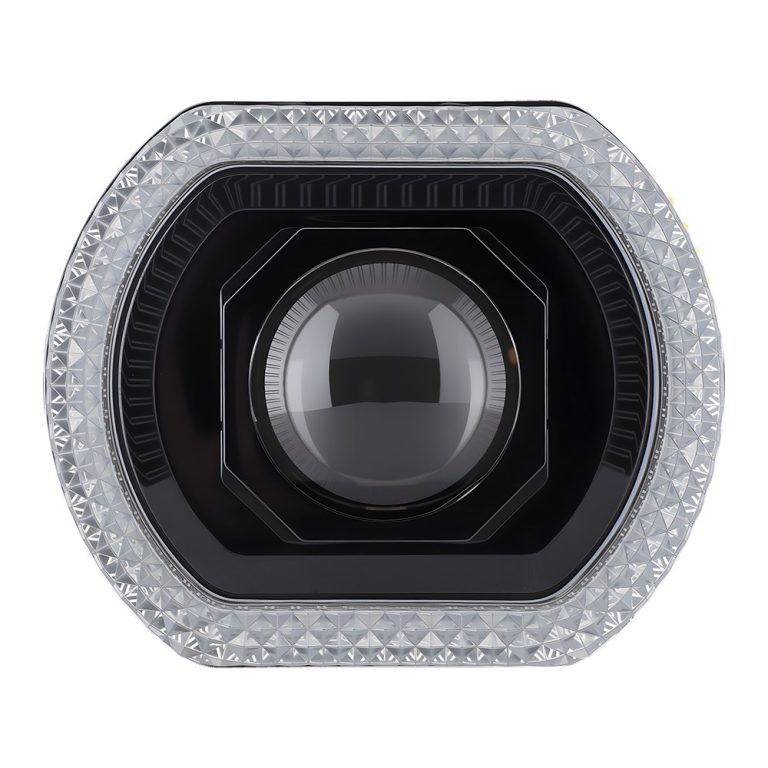
Measure the product rather than assuming that the stated category name guarantees fitment. For halo rings, use the angel eyes halo ring size guide to record the outer and inner dimensions, mounting depth, wire exit, and housing clearance. For projector shrouds or shaped angel eyes, check projector size, overall width, depth, mounting points, and clearance inside the housing.
Also inspect the wire exit and connector position. A ring may have the correct diameter but still be difficult to install if the wire route or mounting surface conflicts with the headlight design.
3. Check wiring, driver, and controller configuration
Lay out every electrical part included with the sample and compare it with the supplier’s description. Record connector type, wire count, controller functions, and the intended connection method.
Electrical values must be confirmed for the exact model before testing. Do not apply a general voltage or wiring assumption to every angel eyes product. If the sample includes a controller or driver, test the complete supplied system together.
4. Bench-test the lighting effect
Use consistent test conditions so two samples can be compared fairly. Check:
- Whether the complete ring or illuminated section lights evenly.
- Whether the selected color or dynamic effect matches the order requirement.
- Whether controller commands respond consistently.
- Whether connectors remain secure during normal handling.
- Whether the product shows flicker, intermittent operation, or an unexpected effect during the test.
Photos and short videos are useful evidence, but camera settings can change how brightness and color appear. Final approval should include a direct visual check under the buyer’s normal working conditions.
5. Install the sample in the intended headlight
A bench test cannot confirm complete fitment. Install the sample in the actual housing or a representative test assembly before bulk approval.
- Confirm mounting position and clearance from the projector, reflector, lens, and moving parts.
- Check wire routing and the space needed for the driver or controller.
- Confirm that the planned installation does not compromise housing closure or sealing.
- Test the product with the intended vehicle or test setup for flicker, warning messages, or control conflicts.
- Verify the finished appearance from normal viewing angles.
Vehicle compatibility, electrical behavior, and road-use rules can vary by application and market. These points should be checked by the buyer or installer for the intended use.
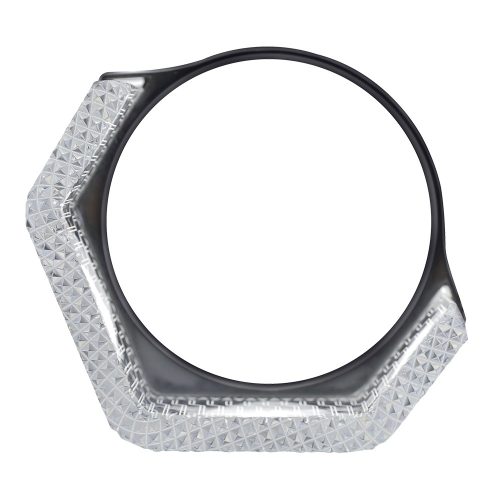
6. Compare pair and sample consistency
If the product will be sold or installed as a pair, test the left and right units together. Compare visible color, effect timing, controller response, physical finish, connectors, and included accessories.
One approved sample reduces fitment and communication risk, but it does not replace a bulk inspection plan. For quantity orders, define which details must match the approved sample and how random units will be checked before shipment.
7. Review packaging and identification
Wholesale buyers should test more than the light itself. Confirm whether each unit or pair can be identified after it enters your warehouse.
- Product or model label
- Quantity per inner box and carton
- Included controller, driver, wires, and accessories
- Basic handling or installation information where applicable
- Neutral, customized, or private-label packaging requirements
Packaging and labeling options depend on the exact model and order quantity, so they should be confirmed before the bulk quotation is finalized.
8. Create written acceptance criteria
Send the supplier a short approval record instead of writing only “sample is okay.” A useful record includes:
| Item | What to record |
|---|---|
| Product identity | Model, product URL, catalog code, and approved photo |
| Fitment | Measured dimensions, mounting position, and headlight application |
| Electrical configuration | Confirmed model-specific values, driver, controller, connector, and wiring |
| Lighting result | Color or effect, uniformity, pair comparison, and test evidence |
| Packaging | Accessories, label, inner box, carton, and branding requirement |
| Order information | Sample approval date, estimated quantity, destination, and required timing |
This record gives both buyer and supplier a practical reference for the production order.
Angel eyes sample request template
Buyers can send the following information when requesting a sample:
We want to test an angel eyes sample before a wholesale order. Product link or catalog code: [insert]. Required size or projector application: [insert]. Lighting effect and controller requirement: [insert]. Vehicle or headlight application: [insert]. Sample quantity: [insert]. Estimated bulk quantity: [insert]. Packaging requirement: [insert]. Destination country: [insert]. Please confirm the exact model, included accessories, model-specific electrical information, sample availability, dispatch time, and bulk lead-time range.
How WANGHOI handles sample and bulk orders
Angel eyes halo rings and demon eyes are core WANGHOI factory-produced categories. WANGHOI also coordinates additional automotive and motorcycle lighting products through long-term partner factories, combining production experience with supply-chain sourcing for B2B buyers.
For in-stock angel eyes samples, dispatch can often be arranged on the same day after the sample fee is received, subject to final stock confirmation and the order time. Bulk orders are generally planned within 3-15 days depending on the exact model, quantity, and customization requirements.
WANGHOI normally states a 12-month warranty and continues to support long-term customers according to the actual transaction and product issue. When a verified WANGHOI error causes customer loss, the issue is addressed directly and a practical resolution is discussed.
Frequently asked questions
How many samples should a wholesale buyer test?
There is no universal number. The sample quantity should be enough to test the intended fitment, pair consistency, controller, installation process, and packaging. Buyers comparing several sizes or effects should request each exact version that may enter the bulk order.
Can one sample prove bulk-order quality?
No. A sample helps define the approved product and reduce misunderstanding. A bulk order still needs written specifications, production confirmation, and an agreed inspection or acceptance method.
Can custom angel eyes samples be requested?
Customization can be discussed by exact model, including supported size, lighting effect, controller, label, or packaging. Availability, cost, and timing vary by product and requirement.
What information should the supplier provide?
The supplier should identify the exact model, product images, relevant dimensions, included electrical components, model-specific operating information, packaging, sample availability, and which documents or compliance materials are available for that model. Buyers should not assume that one report or specification applies to every product.
Next step: Browse the Angel Eyes product category, compare COB and 5D crystal angel eyes, read the wholesale supplier guide, or contact WANGHOI with your sample checklist.