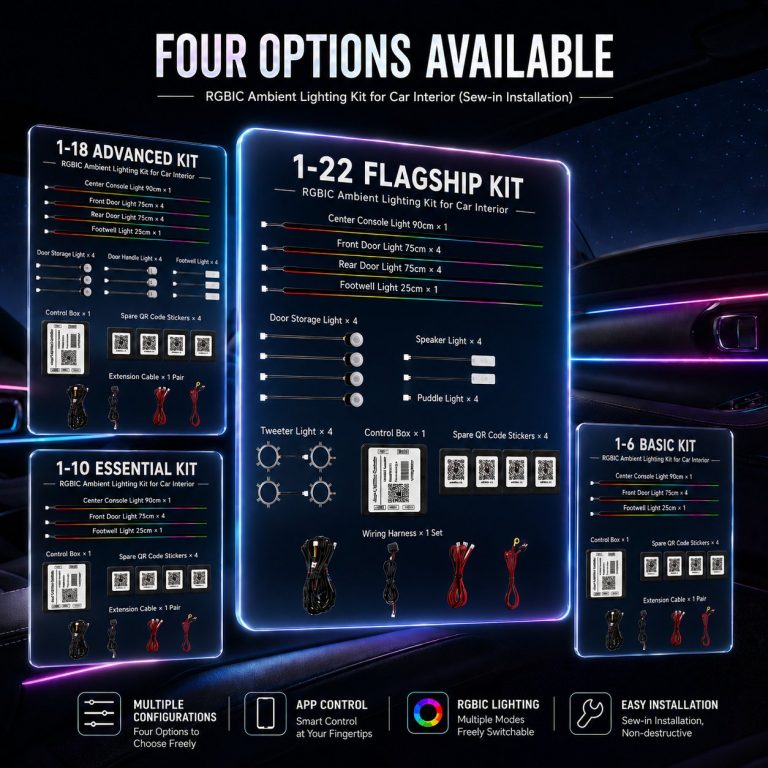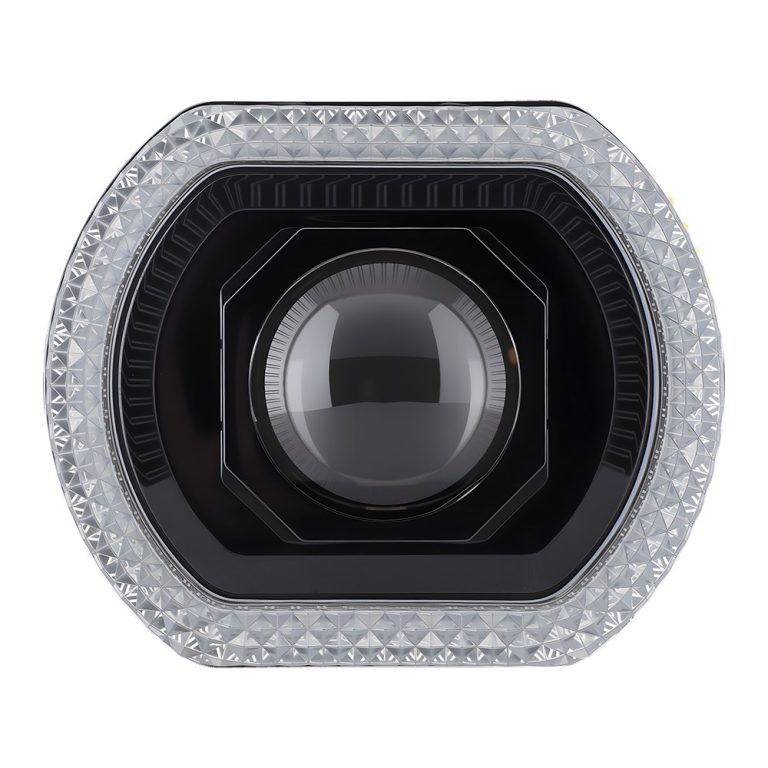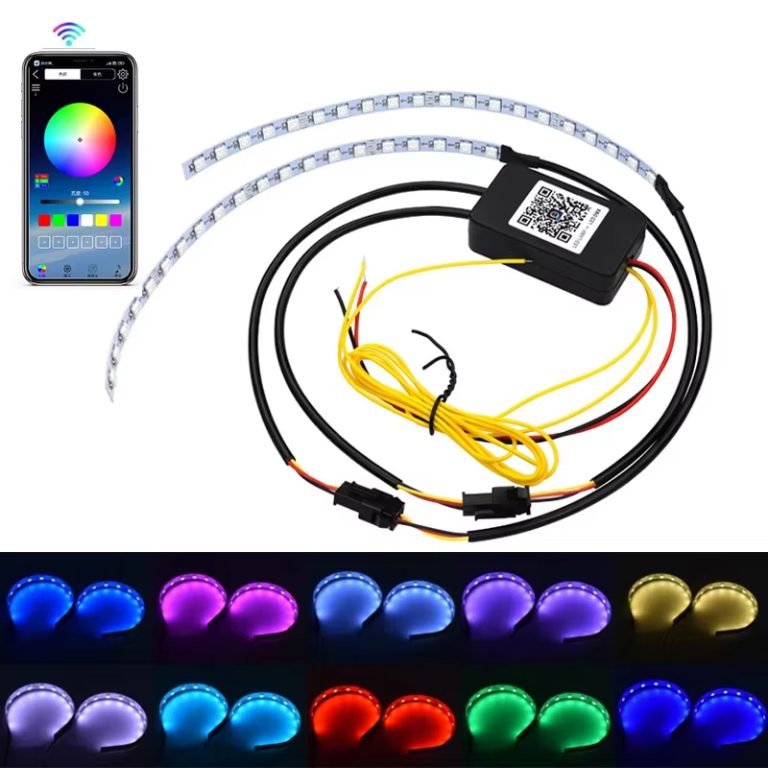


Short answer: Start a custom angel eyes halo ring project from an existing product or an approved reference sample, then define only the changes that matter to the order. Buyers should confirm the ring or shroud dimensions, shape, lighting effect, controller, wiring, connector, labeling, packaging, sample acceptance criteria, and quantity range before a bulk quotation is finalized.
Customization is not one universal menu. A change that is practical for one halo ring may not be practical for another structure. WANGHOI can discuss custom requirements, but feasibility, minimum quantity, sample cost, tooling need, documentation, and lead time must be confirmed for the exact model and requested change.
What does custom mean for angel eyes halo rings?
For a wholesale or private-label buyer, custom work normally starts with one of three situations:
- Model selection: the buyer needs help choosing an existing round, U-shaped, spoon-shaped, spiral, COB, crystal, single-color, switchback, or RGB direction.
- Model-level changes: the buyer has a baseline product and wants specific changes discussed, such as dimensions, color effect, controller package, wire or connector arrangement, label, or package presentation.
- Project development: the buyer has a drawing, sample, headlight housing, installation target, or market requirement that needs feasibility review before a model is selected.
Do not begin with the sentence “make this custom” alone. Send one product URL or reference image and identify what must stay the same and what must change. This separates a sourcing request from a development request and makes the quotation more useful.
Customization items buyers should define
| Item | What the buyer should provide | What must be confirmed |
|---|---|---|
| Size and fit | Outer dimension, inner clearance, width, depth, mounting path, wire exit, and installation space. | Measurement method, tolerance, physical structure, and exact sample fit. |
| Shape | Round, partial ring, U-shape, spoon shape, spiral, shroud, or reference drawing. | Whether an existing product can be used or a new structure is required. |
| Lighting effect | Single color, dual color, RGB, sequential, or another required effect. | Exact function, controller version, startup behavior, and sample result. |
| Controller | App, remote, wired input, or model-specific control preference. | Controller, app source, functions, accessory list, and compatibility by model. |
| Wiring and connector | Preferred wire length, connector reference, pinout, and installation route. | Electrical and mechanical feasibility for the exact product. |
| Branding | Logo file, label location, product name, barcode, and language requirements. | Available print or label method, artwork approval, quantity, and cost. |
| Packaging | Retail box, neutral box, kit contents, inserts, labels, carton marks, and destination market. | Package structure, artwork, protection, quantity, and final packing specification. |
This table is a quotation checklist, not a promise that every item is available on every product. Use the angel eyes halo ring size guide before requesting a dimensional change.
Start with a baseline model
A baseline model is the exact product, sample, drawing, or specification that both sides use as the starting reference. It prevents the word custom from hiding important differences.
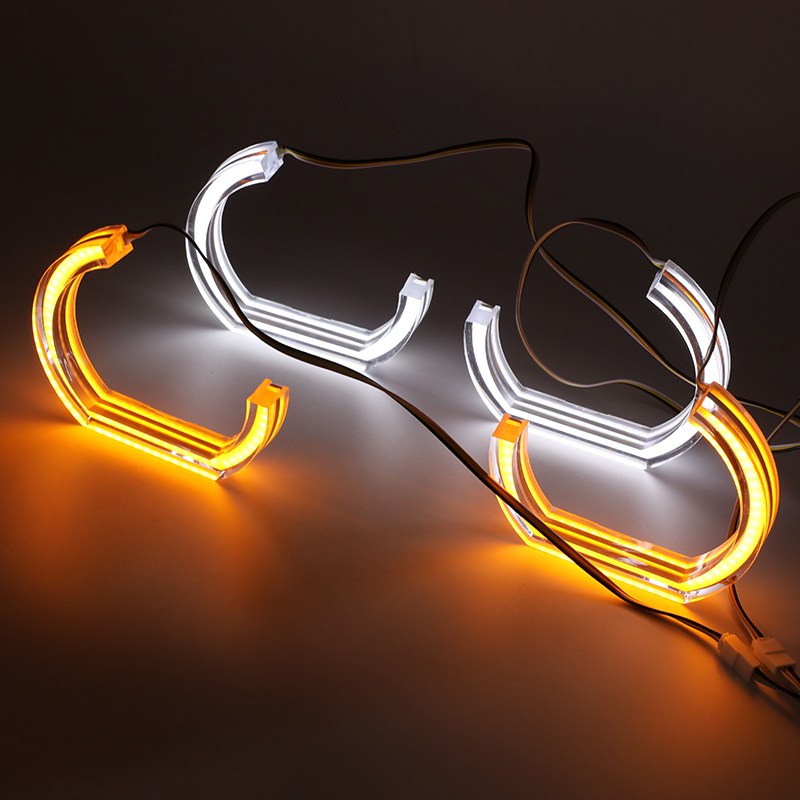
For example, the U-Shaped Crystal Angel Eyes White Amber 105-128mm Kit provides a clear shape, color direction, and listed size range for first-round comparison. A buyer should still confirm the exact requested dimension, installation space, wiring, connector, and sample result.
A practical OEM/ODM workflow
- Choose the product direction. Send one to five product URLs, catalog references, or clear images. Explain the target buyer, vehicle or installation environment, and destination market.
- Write the change list. Separate required changes from optional ideas. Mark every requested size, color, function, controller, wire, connector, label, and package change.
- Review feasibility. WANGHOI checks the exact model and coordinates the relevant production and supply-chain resources. MOQ, sample cost, tooling, documentation, and timing are confirmed after the scope is clear.
- Approve the sample. Record the product, dimensions, lighting effect, controller, wiring, connector, accessories, label, and package that were actually tested.
- Lock the bulk specification. Put the approved sample references, photos, videos, artwork versions, kit contents, acceptance checks, quantity, and delivery terms on the order confirmation.
- Keep a repeat-order record. Reuse the same approved model and control sheet. Any requested change should be treated as a new revision and confirmed again.
The company-wide OEM and ODM automotive LED lighting page explains the broader service process. This guide focuses only on angel eyes halo ring decisions.
How to test a custom sample
A sample should prove the agreed changes, not just show that the product turns on. Photograph the sample beside the approved drawing or baseline model, then record the controller, wiring, accessories, label, and package.
- Measure the agreed outer dimension, inner clearance, width, depth, mounting points, and wire exit.
- Install the sample in the intended housing or use a physical template when the housing is not available.
- Test the required color, effect, startup behavior, controller functions, and paired-unit consistency.
- Confirm the actual wire, connector, pinout, controller, remote, app reference, and accessories included.
- Check label text, barcode, artwork revision, package protection, inserts, and carton marks when packaging is part of the project.
- Save the acceptance result in writing before approving the bulk order.
Use the complete angel eyes sample testing guide to build the approval record.
Controller and effect changes need their own approval
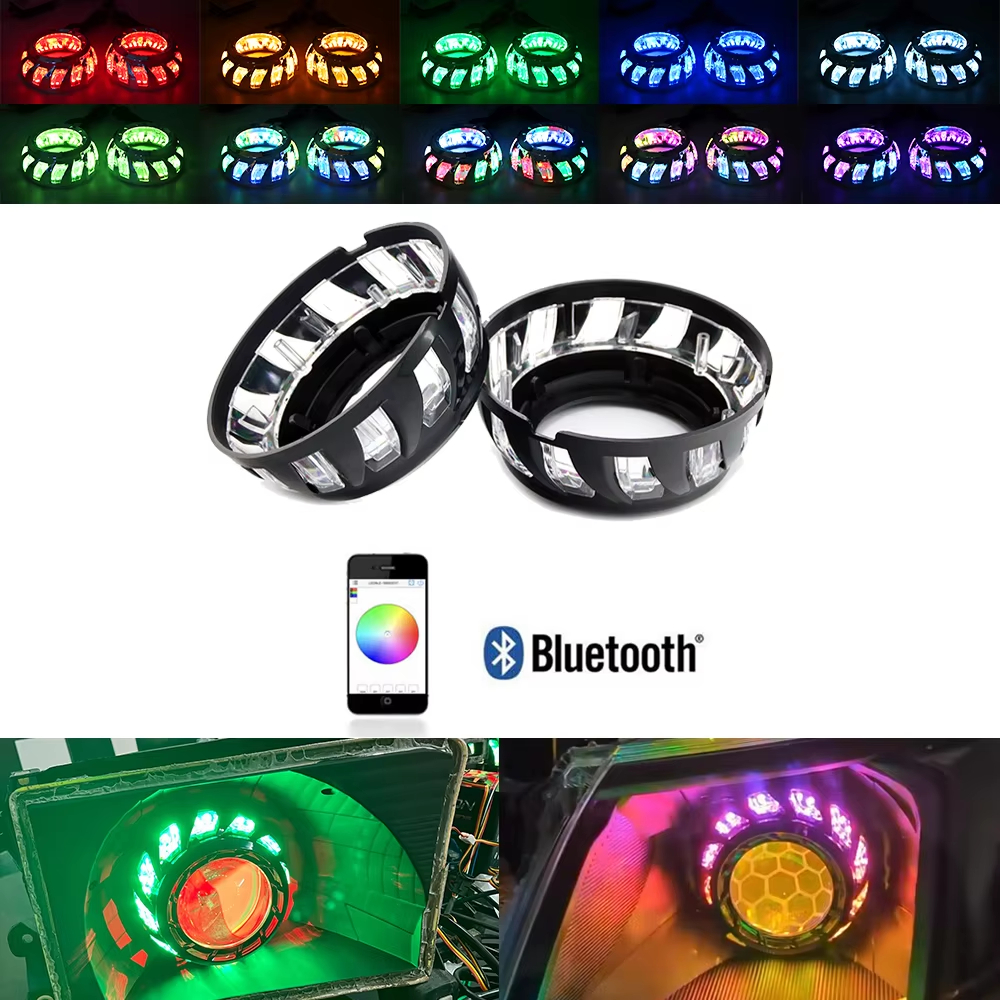
An RGB or sequential halo is not defined only by the illuminated ring. The controller, app or remote, wiring, connectors, startup behavior, memory behavior, and included accessories can change the buyer experience.
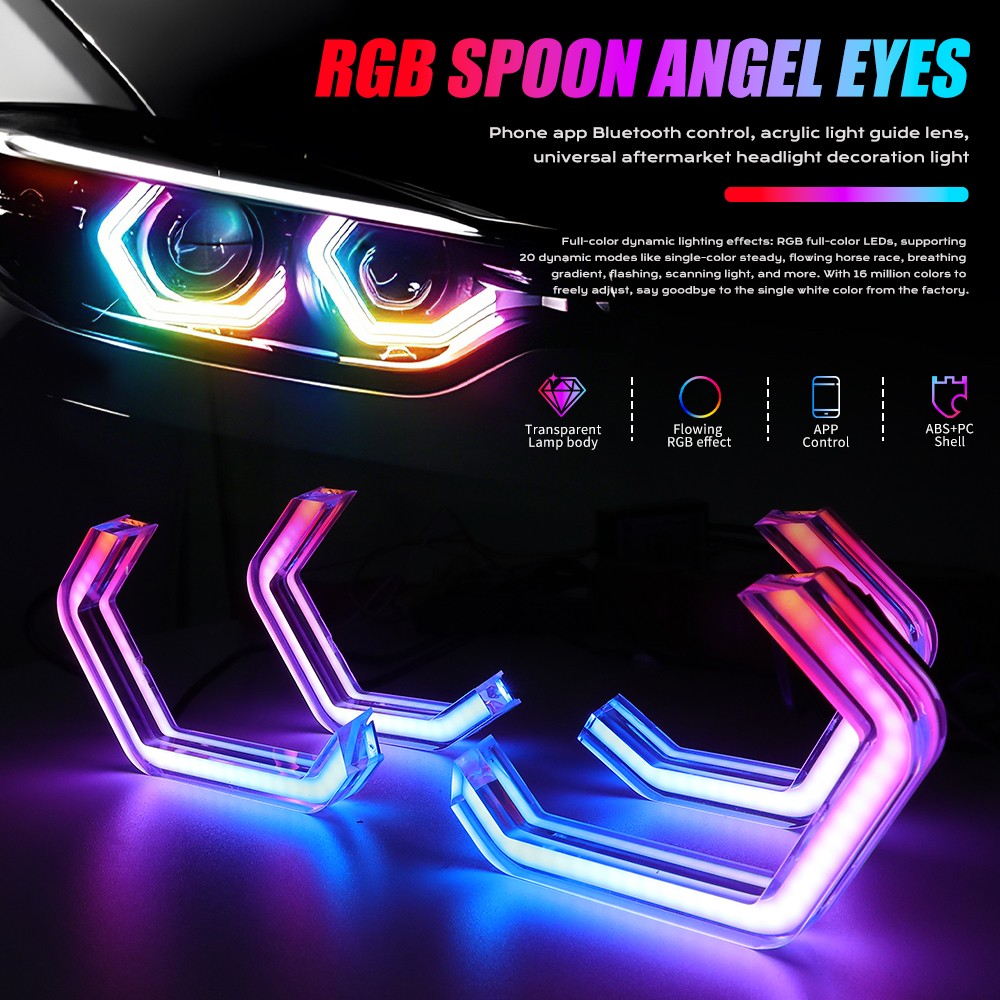
The RGB LED Angel Eye Spiral Shrouds with App Control Sequential Flow is a real model reference for buyers comparing shaped halo products and app-control direction. Its product title does not replace model-level confirmation of the controller and kit contents.
Samples, MOQ, lead time, and warranty
Sample orders are accepted so buyers can test the exact model and proposed configuration. When a standard in-stock sample is available, it can often be sent on the same day after the sample fee is received, subject to stock status and order time. A customized sample requires a separate timing check based on the requested work.
There is no useful universal MOQ for every customization request. The required quantity depends on the baseline model, change type, tooling, controller, label, packaging, and production arrangement. Buyers should provide both the sample quantity and expected bulk quantity range so the correct path can be discussed.
Bulk production is generally discussed within a 3-15 day range, depending on the exact model, quantity, customization, material readiness, and approved specification. The final delivery schedule must be confirmed on the order.
Standard warranty communication is normally 12 months, while practical support is handled with a long-term cooperation approach. If a verified WANGHOI responsibility causes a customer loss, the issue is not denied; the team reviews the evidence and discusses a practical remedy such as replacement, credit, or compensation according to the confirmed case.
What to send for a useful quotation
- Company type and destination country.
- Baseline product URL, sample photo, drawing, or catalog reference.
- What must stay unchanged and what must be customized.
- Required dimensions, shape, color, effect, and installation environment.
- Controller, app, remote, wiring, connector, and accessory requirements.
- Logo, label, barcode, language, packaging, and carton-mark requirements.
- Sample quantity and expected bulk quantity range.
- Target date and any required documents for the destination market.
Detailed voltage, power, lumen, waterproof rating, packing size, and certification availability will be confirmed by exact model before quotation.
Common OEM/ODM mistakes
- Asking for a custom quote without a baseline product, drawing, or sample.
- Using only a vehicle name without measuring the real mounting space.
- Approving the illuminated effect but not the controller, wiring, and accessories.
- Starting package artwork before the product and kit contents are fixed.
- Leaving MOQ and lead time assumptions outside the written quotation.
- Approving a sample without saving its model, revision, photos, and test record.
Where WANGHOI fits
WANGHOI combines direct production of core angel-eye and demon-eye products with long-term partner-factory coordination for the wider automotive and motorcycle lighting range. This means buyers can discuss a focused halo-ring project while also coordinating related projector, shroud, controller, wiring, packaging, or lighting products when needed.
This is a factory-and-trade integrated sourcing model, not a claim that one factory makes every product. Browse the angel eyes halo ring range, review the private-label packaging process, or send the baseline model and change list through the wholesale quote form.