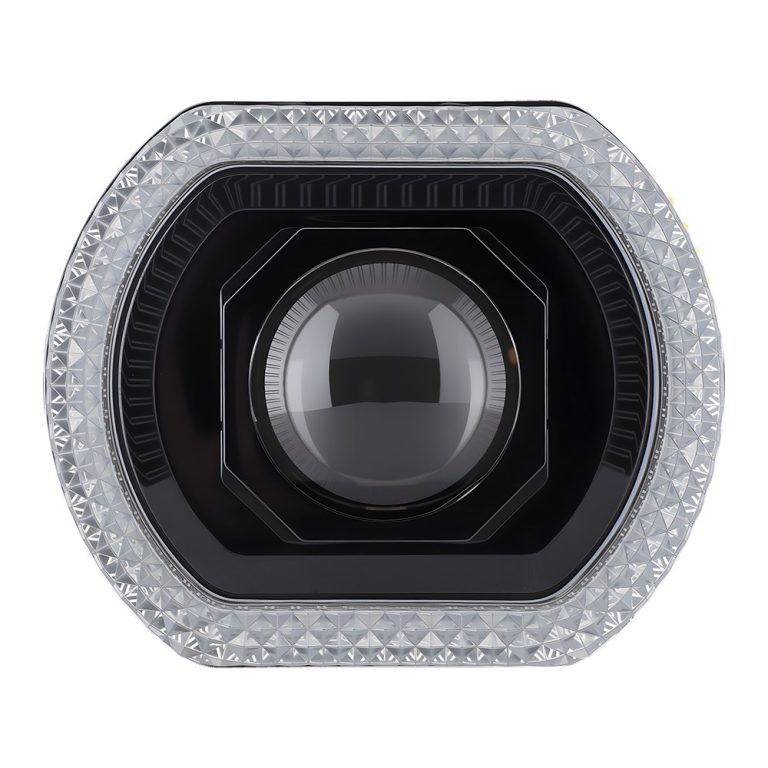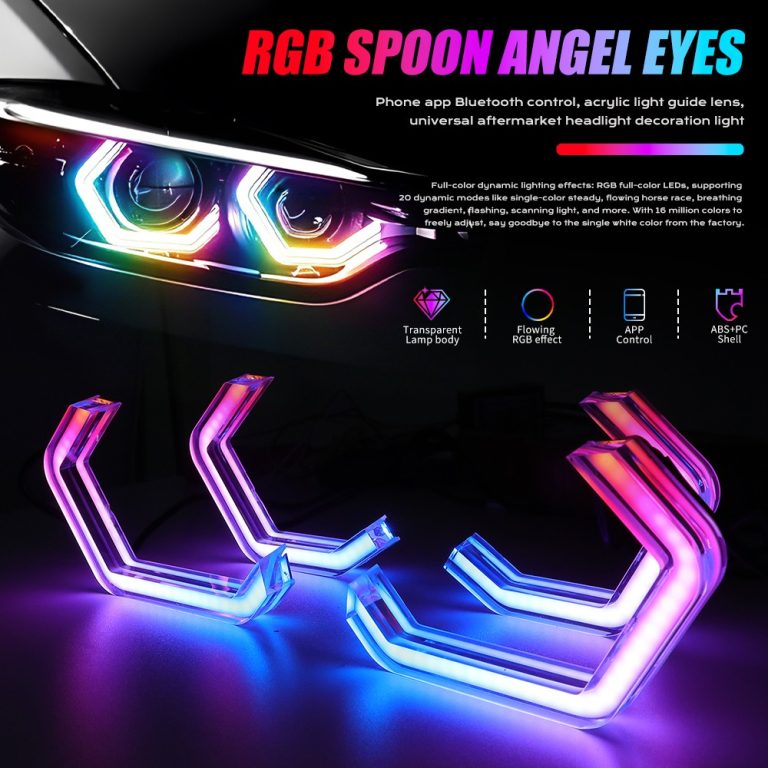


Short answer: Angel eyes and demon eyes are different lighting elements. Angel eyes usually create a visible halo, ring, or shaped outline around a projector, shroud, or reflector area. Demon eyes usually create a colored or decorative light effect inside or behind the projector lens area. Exact construction, wiring, and control method vary by model.
The names are sometimes mixed in product listings because one projector assembly can include both effects. Retrofit shops and wholesale buyers should therefore compare the mounting position, visible effect, dimensions, wiring, controller, and kit contents instead of choosing by the product name alone.
Angel eyes vs demon eyes at a glance
| Comparison point | Angel eyes | Demon eyes |
|---|---|---|
| Typical visible position | Around a projector, shroud, reflector, or headlight opening. | Inside or behind the projector lens area. |
| Typical visual effect | A halo, ring, partial ring, or shaped outline. | An internal colored or decorative projector effect. |
| Main fitment checks | Outer diameter, inner clearance, mounting depth, mounting points, and wire exit. | Projector size, internal space, mounting position, heat clearance, and wire routing. |
| Control questions | Single color, dual color, RGB, sequential effect, and controller requirement by model. | Color or effect, controller type, app or remote function, and accessory contents by model. |
| Common sourcing form | Loose halo ring, shaped halo, halo shroud, or complete lamp with halo styling. | Projector insert, internal light module, projector kit, or complete lamp with demon-eye styling. |
| Best sample test | Fit, ring appearance, color consistency, mounting, wiring, and controller behavior. | Internal effect, fit, heat clearance, wiring, controller behavior, and interaction with the projector. |
This table describes common product structures, not a universal specification. A supplier’s exact product page, drawing, wiring photo, and sample should decide the final classification.
What are angel eyes?
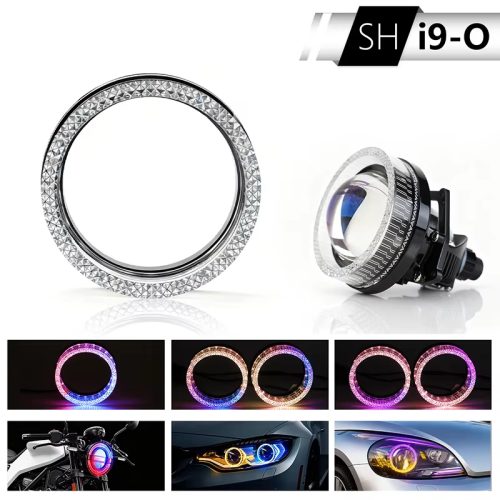
Angel eyes are halo-style lighting elements used around or near a headlight projector, reflector, shroud, or lamp opening. Depending on the exact model, the visible shape may be a full circle, partial ring, U-shape, square, or another decorative outline.
For wholesale sourcing, the word angel eyes is not enough to confirm fitment. Buyers should provide the required outside dimension, available inside clearance, mounting depth, wire routing, preferred color effect, and target application. Use the angel eyes halo ring size guide before ordering samples.
What are demon eyes?
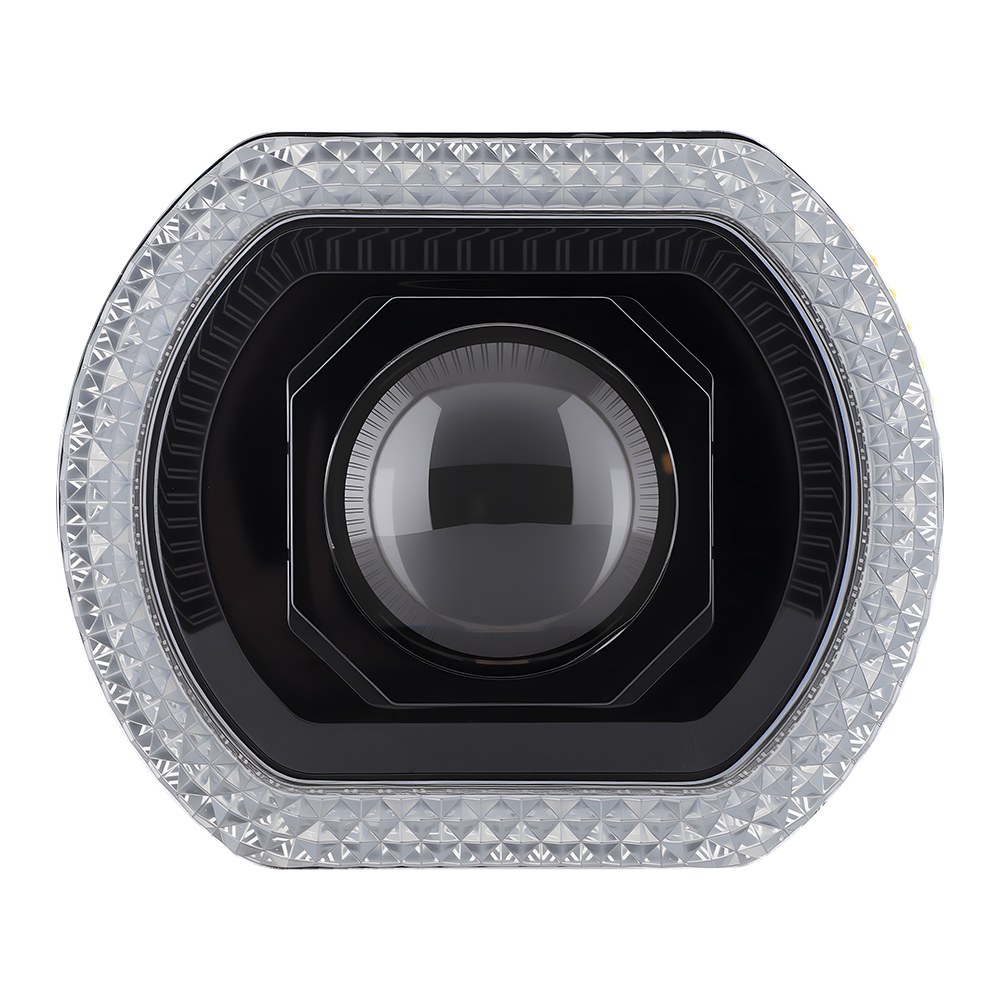
Demon eyes, also called devil eyes in some markets, usually describe a colored or decorative lighting effect located within or behind the projector lens area. Products sold under this name can differ substantially: some are internal lighting modules, some are projector kits, and some are complete lamps that use demon-eye styling.
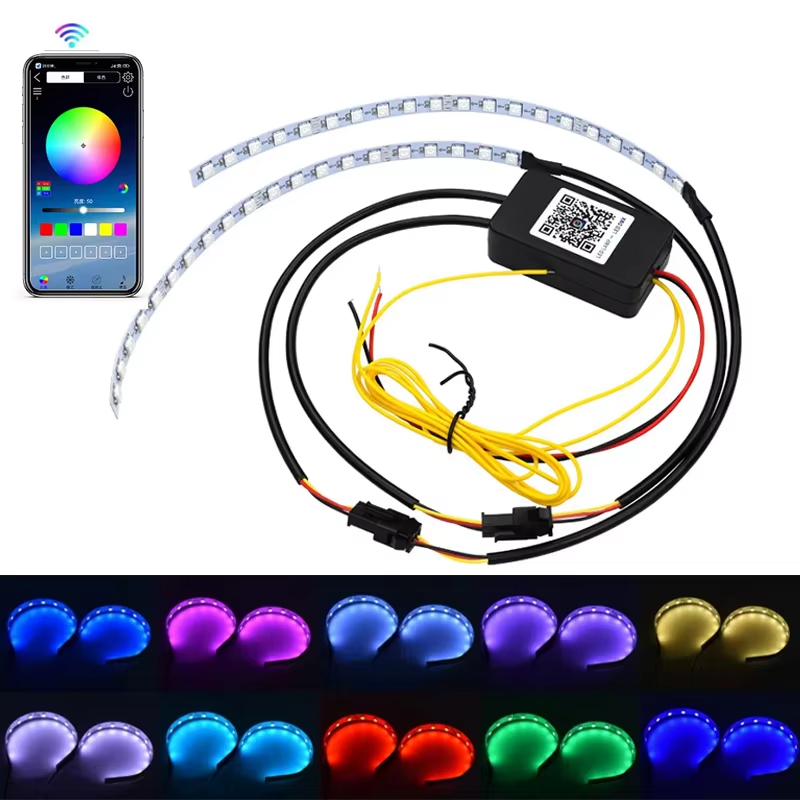
Buyers should confirm whether the quotation includes only the light module or also includes a projector, controller, wiring, remote, app-control component, shroud, or mounting accessories. Do not assume that two products with the same color name use the same controller or connection method.
After choosing the demon-eye direction, follow the projector compatibility checklist before approving a sample.
Can angel eyes and demon eyes be used together?
They can be planned in the same headlight build when the exact products are physically and electrically compatible. This is not automatic. A combined build may require separate mounting positions, sufficient internal space, compatible wiring, suitable controllers, and a clear installation sequence.
Before approving a combined sample, ask the supplier to identify each component in the kit photo. Confirm which part creates the outer halo, which part creates the internal projector effect, and which controller or wiring set operates each function. One useful combined-model reference is the RGB Angel Demon Eye Built-In Projector Lens.
For RGB controller selection, compare app control vs remote control for RGB demon eyes before approving the sample package.
Fitment matters more than the product name
Two listings can use similar words while fitting different headlight structures. A retrofit buyer should check the real mounting environment before comparing price.
For angel eyes, confirm
- Outer diameter or overall width and height.
- Inner opening and clearance around the projector or reflector.
- Mounting depth and available headlight space.
- Mounting points, adhesive or bracket plan, and wire exit.
- Color or effect requirement and controller need.
For demon eyes, confirm
- Projector size and internal mounting position.
- Space behind or around the projector lens.
- Heat clearance and wire routing.
- Controller type and actual accessory list.
- Whether the item is a module, projector kit, or complete lamp.
Detailed voltage, power, lumen, waterproof rating, packing size, and certification availability will be confirmed by exact model before quotation.
What should wholesale buyers test in a sample?
A sample is useful only when it answers the same questions that will determine the bulk order. Record the exact model and controller used during testing, then keep photos or video of the approved result.
- Visual check: Compare shape, surface finish, lens appearance, and visible lighting effect with the approved product photos.
- Fitment check: Test mounting position, clearance, depth, and wire exit in the intended headlight or fixture.
- Function check: Confirm the required color or effect and the actual controller behavior for that model.
- Pair consistency: Compare left and right samples for visible color and effect consistency.
- Installation record: Save the wiring route, controller version, and any installation notes needed for repeat orders.
- Order lock: Put the approved model, controller, kit contents, packaging, and labeling requirements on the purchase confirmation.
For a reusable inspection process, follow the angel eyes sample testing guide.
Common buying mistakes
- Using angel eyes, demon eyes, projector, and shroud as if they mean the same component.
- Choosing from a lighting-effect photo without checking the unlit product, rear housing, wiring, and dimensions.
- Assuming that every RGB model includes the same controller, remote, app, or wiring accessories.
- Ordering by projector size alone without checking the actual headlight space and mounting method.
- Approving a sample effect but failing to record the exact model and controller version for the bulk order.
- Ignoring local color and road-use rules in the destination market.
Information to send before requesting a quote
- Product URL, catalog reference, model code, or clear reference image.
- Required component: halo ring, demon-eye module, projector, shroud, controller, or complete kit.
- Dimensions, projector size, and available installation space.
- Required color, effect, and control method.
- Sample quantity and expected bulk quantity range.
- Customization, packaging, label, or carton-mark requirements.
- Destination country and any document requirements to confirm.
WANGHOI accepts small-quantity sample testing by exact model. In-stock samples can often be dispatched as early as the same day after the sample payment is received, subject to stock and order time. Bulk production is generally 3-15 days depending on the exact model, quantity, and customization. Standard warranty communication is normally 12 months, with continued support handled according to the exact order and verified issue.
Angel eyes and demon eyes are core WANGHOI factory-produced categories. Other automotive lighting categories may be coordinated through long-term partner factories, allowing buyers to discuss related products in one sourcing inquiry without claiming that every item is made in one factory.
Frequently asked questions
Are angel eyes and demon eyes the same?
No. Angel eyes usually form a halo or outline around a headlight area, while demon eyes usually create an internal projector-lens effect. Some complete products include both.
Which is better for a headlight retrofit?
Neither is universally better. Choose according to the intended visible effect, installation space, fitment, wiring, controller, market rules, and whether the project needs one component or a combined build.
Do all demon-eye kits include a controller?
No. Controller type and kit contents vary by exact model. Confirm the controller, wiring, remote or app function, and accessories before quotation.
Can a buyer order angel eyes and demon eyes together?
Yes, but send the exact product URLs or model references. Compatibility and kit contents should be confirmed before the sample or bulk order.
What should a distributor approve before a bulk order?
Approve the exact model, dimensions, visible effect, controller, wiring, sample result, packaging, labeling, order quantity, lead time, and required documents.